
Ballwin Directory Collections at the County Library
No confirmed standalone historical Ballwin run is known. The practical shelf is St. Louis County Library, especially its Emerson History & Genealogy Center. The broad county-directory guide covers 1893 through 1979, while the catalog identifies selected surviving county volumes beginning in 1903 and continuing through 1979. That difference is important: a name missing from one year may reflect a missing volume, an indexing issue, a move, or a different place label.
| Collection | Years | Where Held | Access |
|---|---|---|---|
| St. Louis County directories | Guide: 1893-1979; cataloged volumes: 1903-1979 in selected years | SLCL catalog, print, and microfilm | Read surviving volumes; the run is discontinuous |
| Digital St. Louis County Directories | Selected digitized years | SLCL Digital Archives | Free name or partial-address search, then browse |
| St. Louis city directory holdings | 1821-1860 and 1860-1980 | Library print, microfilm, and digital holdings | Comparison source for movement between city and county |
| Reverse or criss-cross pages | First documented at the back of a 1922 city volume | Emerson Center print or microfilm | Inspect the book; an exact Ballwin run is not confirmed |
The catalog sequence is useful when planning a visit: it identifies 1903, 1909, 1917, 1920, 1922-23, 1930, 1932, 1934, 1936, 1938-39, 1941, 1943, 1946, 1949, 1953, 1955, 1957-59, 1961-63, 1965-71, 1973-76, and 1979. Those listed books offer spaced checkpoints, not an annual series. Note the selected date before comparing names, since a gap may be several years wide.
The library’s genealogy collection also covers phone and farm books, plats, atlases, yearbooks, newspapers, local histories, and family material. Treat a listing as a date-specific clue rather than proof of a present address or legal title.
The library collection page below is a useful starting point when a Ballwin name needs to be tried in county, map, yearbook, or phone-book material.
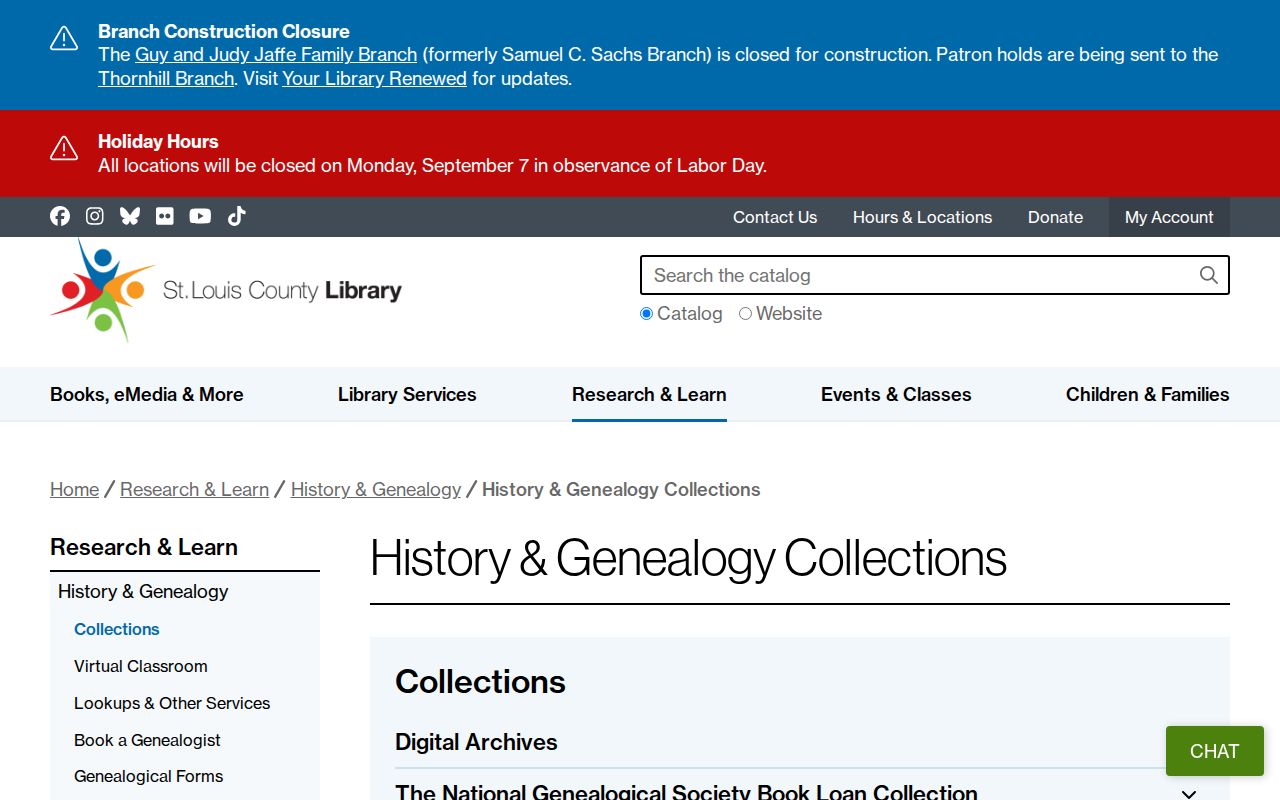
Choose the record format that fits the time period, then keep its title and page reference with every finding.
Why Ballwin Historical Directory Searches Start at County Level
Ballwin incorporated in 1950. Earlier address and name evidence can sit under St. Louis County, a rural description, a subdivision, or a nearby postal place instead of the modern city name. Begin with the county run before deciding that a city-only search is complete. The library’s city volumes are still useful when a person moved across the city-county line.
The city history also records “Ballshow” as an early name before its 1837 amendment to Ballwin. Use that spelling only as historical context. A precise street, subdivision, or house number is a stronger way to separate people with the same name.
Search a Ballwin City Directory in Digital Archives
The St. Louis County Directories guide is free and needs no library card for its directory workflow. Select a year, search a name or portion of an address, and then browse the alphabetic section. The guide recommends browsing because OCR and indexing can miss a name, initials, or a street form.
- Choose the county directory year nearest the event or address.
- Try the surname, initials, spouse notation, or a partial address where available.
- Open the alphabetic section and read nearby entries, not just a search hit.
- Repeat with the prior and later surviving volumes, noting each page or image citation.
The illustrated directory guide below shows that browser route. Search produces a lead; reading the selected pages checks that lead against OCR variation.
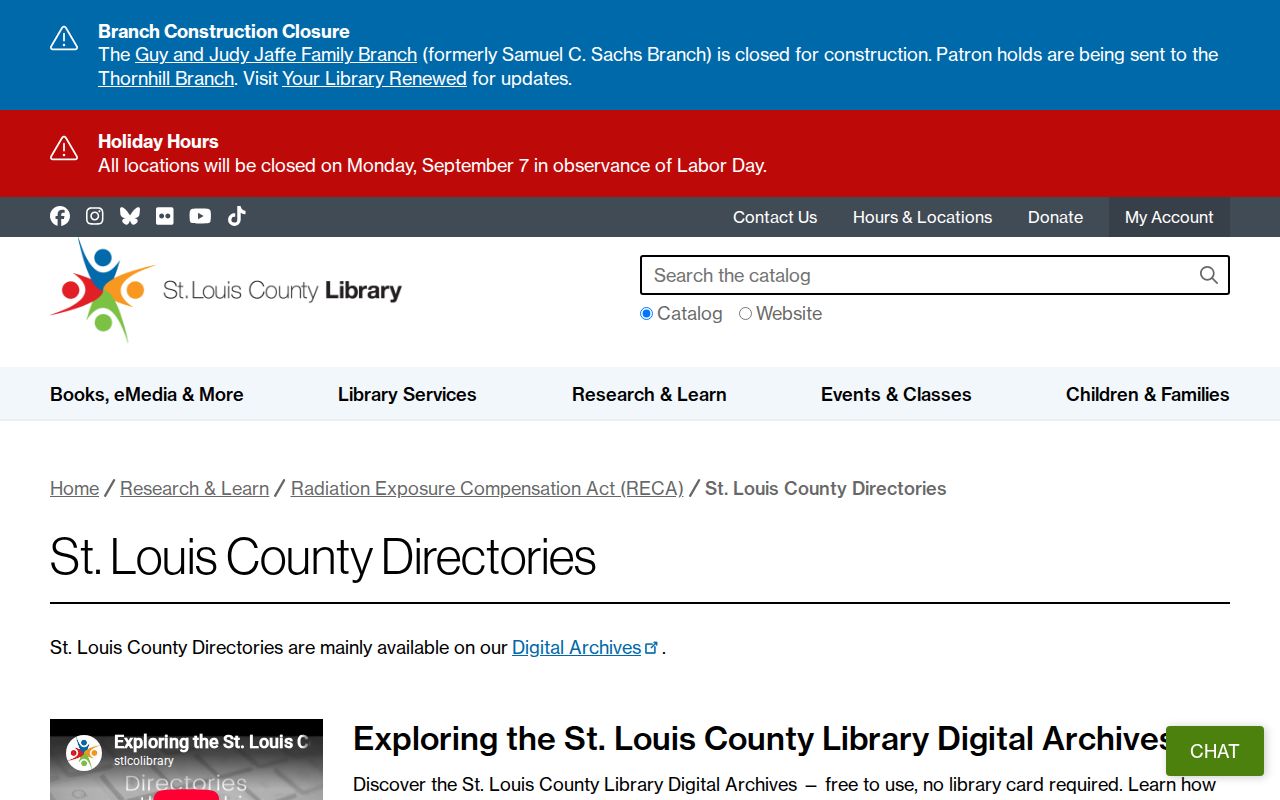
If a result disappears, return to the selected year and alphabetic section instead of assuming the person was absent. When an address is the only starting point, try only a portion of the address and then browse the surrounding pages. A changed street suffix, an initial rather than a full given name, or a spouse notation can be enough to hide an otherwise relevant line from an OCR search.
Ballwin Directory Research at Emerson Center
The Emerson History & Genealogy Center at the Clark Family Branch is the physical fallback for material not clearly digitized. A 2024 library report places it on the second floor at 1640 S Lindbergh Blvd and describes high-density shelving, double-monitor stations, new microfilm readers, FamilySearch touch screens, copying, and digital-scanner options. Confirm current hours and access arrangements before going.
Genealogy reference services and consultations are available in person, by phone, or by Zoom by appointment. A staff lookup can retrieve a precise indexed print, microfilm, or index citation. There may be up to three active requests and results are sent by email, but the service does not conduct open-ended research.
The library’s reference-services page is shown below. Supply a volume, approximate date, address or surname, and the item to be checked.
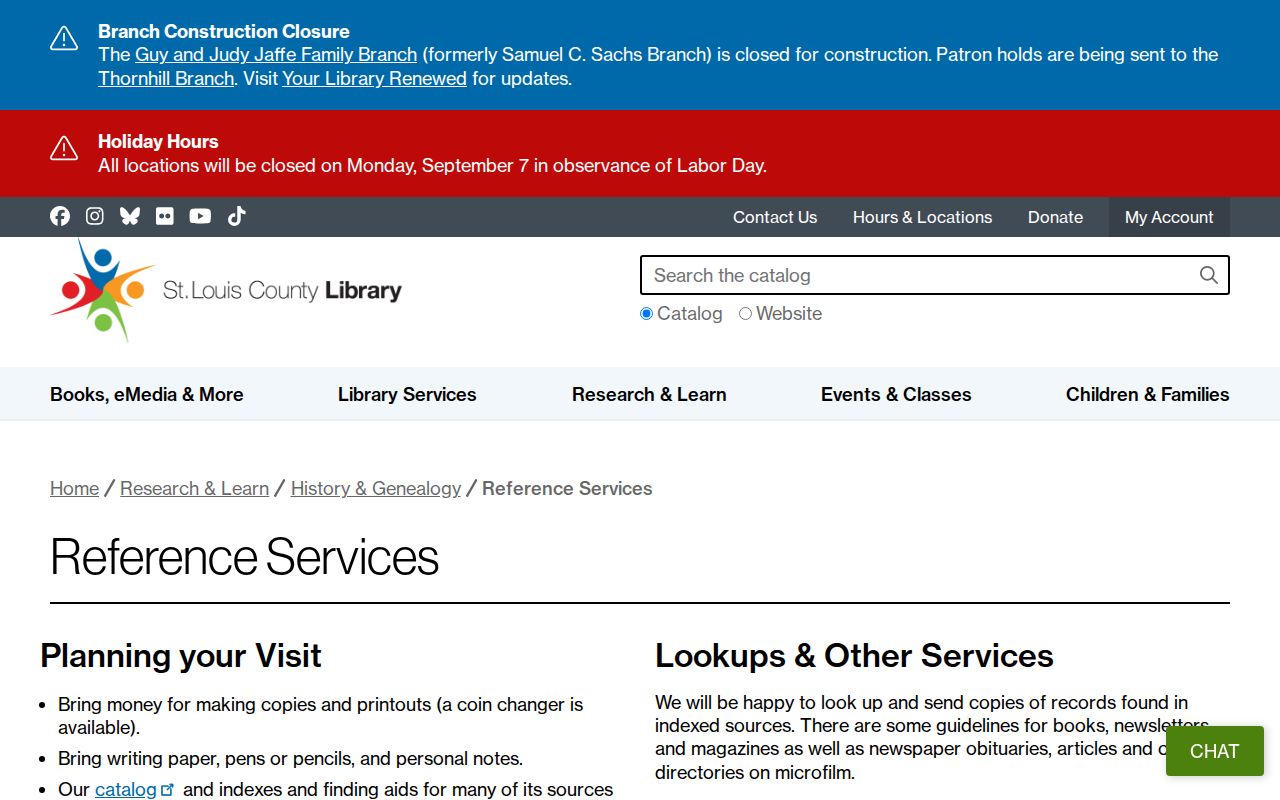
A narrow citation request gives library staff a defined source target and creates a result another researcher can check.
Reading a Ballwin City Directory Entry
A directory line is compact and its conventions change by volume. Local entries can show a surname and given name, spouse notation where supplied, an address, telephone information in later books, a widow notation, business classification, and other period labels. They do not establish a present address or settle legal title. Read the volume key and several adjacent lines before transcribing an unfamiliar mark.
| Name line | Indexed surname and given name, sometimes with initials or a suffix. |
|---|---|
| Relationship clue | Spouse notation or a widow notation when the volume supplies it. |
| Address | A dated street and house-number clue that needs comparison with other sources. |
| Residence notation | A period abbreviation or owner clue when printed, interpreted only through that volume’s key. |
| Page context | Neighboring names, section, and image or page number that make the citation repeatable. |
- Criss-cross section
- An address-ordered portion of some directories that can lead from a street and number to a listed occupant.
- Householder index
- An index around the named household entry that may not identify every person connected with the address.
- Abbreviation key
- The volume’s explanation of shorthand. Note it before deciding what an entry mark means.
Ballwin City Directory Reverse Pages by Address
Reverse material is the address-first option when an old street is known but a name is not. A library PastPorts guide identifies a reverse directory at the back of a 1922 city volume. Later conventions vary, and the research did not locate an exact Ballwin reverse run, so inspect the selected county or city volume instead of assuming every year includes it.
Begin with the street and number as printed, then browse nearby numbers. If that fails, try an abbreviated street type, a prior postal place, the subdivision, and a legal description from a deed or plat. No historical Ballwin street-number conversion map was found, so an uncertain number should be checked against adjacent parcels and original pages.
Ballwin Directory Dates and Collection Gaps
The record sequence is layered rather than continuous. The county-directory guide spans 1893-1979, but the catalog lists selected surviving books from 1903 through 1979. City holdings span 1821-1860 and 1860-1980. A reverse section is first documented in a 1922 city volume, and Ballwin’s 1950 incorporation explains why earlier people may appear outside a Ballwin heading.
| Before 1950 | Search county, postal-place, subdivision, and nearby-city labels before expecting a Ballwin heading. |
|---|---|
| 1950 | Ballwin incorporated, adding a municipal context while county and library sources remained central. |
| 1979 | Last year in the broad county-directory guide; consult the catalog for surviving volumes. |
| Digital access | Selected county books are online, while print and microfilm remain essential for other gaps. |
Official library material does not identify one publisher for all relevant county books. Inspect the actual title page before adding an imprint to a research note.
Ballwin Directory Companions: Obituaries and Yearbooks
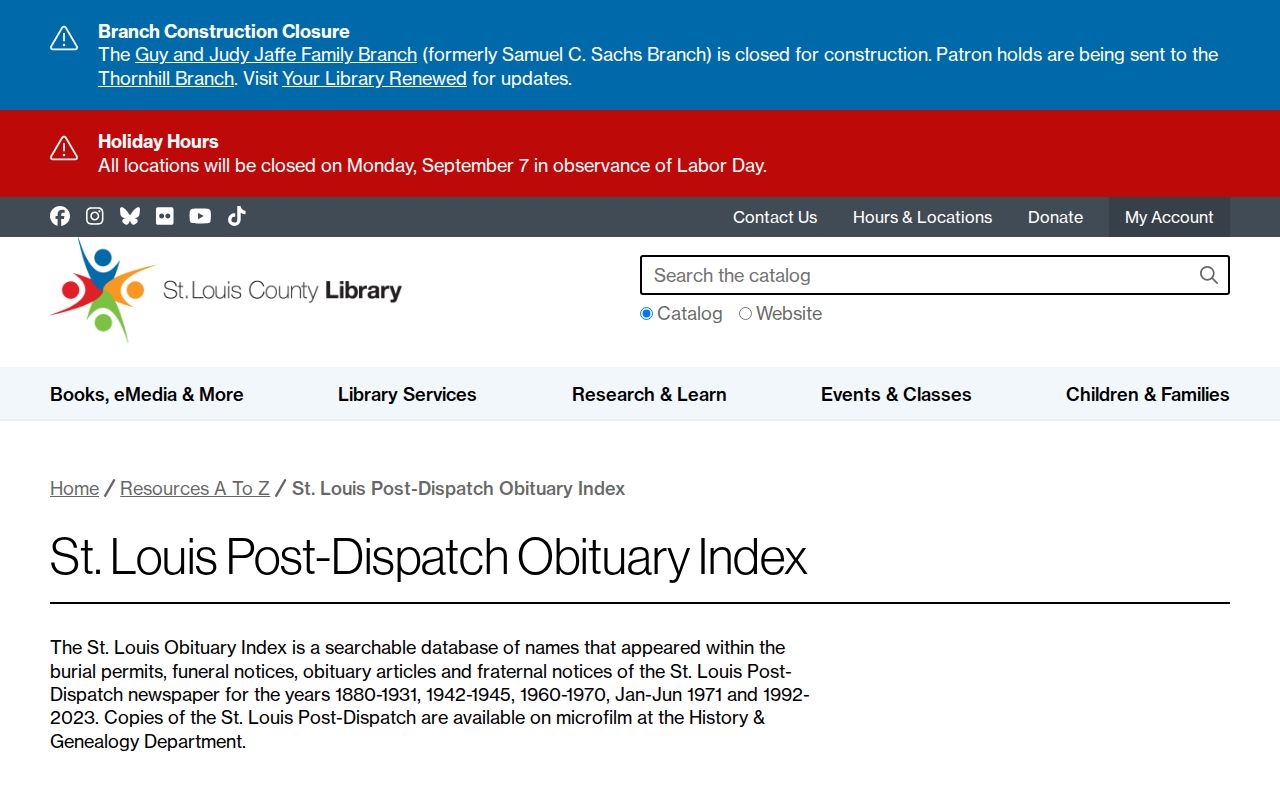
When a household leaves a volume, test the lead with a census, deed, permit, obituary, probate record, yearbook, map, or newspaper citation. The St. Louis Post-Dispatch obituary index covers 1880-1931, 1942-45, 1960-70, January through June 1971, and 1992-2023. It includes burial permits, funeral notices, obituaries, and fraternal notices, but it is not exhaustive and is not evidence of a present address.
The Post-Dispatch obituary index is shown below. A notice can connect relatives, a funeral home, cemetery, church, or last address, then probate or a recorded instrument can test that connection.
Library source guides also identify county court transcriptions, land claims, cemetery material, church records, naturalization indexes, wills, military sources, and local yearbooks. Select one of those companion sources only after the directory supplies a date, name, or place anchor. For building context, the Ballwin Historical Association’s Old Schoolhouse and log-house archives offer another local contact route, not a current resident index.
Trace a Ballwin City Directory Household Across Years
Start with one exact address or a well-defined name, then follow the household through surviving volumes on both sides of a known event. Pair a directory year with a federal census year when released under the 72-year rule. A directory is a dated snapshot while a census is decennial, so a deed, plat, obituary, probate record, or permit should test an apparent move.
- Record the address, municipality, ZIP, subdivision, and legal description from a parcel or GIS result.
- Search and browse county books around the address, retrying initials, spouse notation, and street abbreviations.
- Read reverse pages where present and compare adjacent listings for continuity on the block.
- Compare prior and later books for a move, widow notation, or another change needing confirmation.
- Pair the evidence with a released census, then close the trail with a deed, obituary, probate, or other dated source.
A name that vanishes may reflect relocation, death, a gap in surviving books, changed indexing, or an unlisted address. Keep the source date beside each conclusion, and do not use one directory page alone to claim present residency.